Structural Drying and Dehumidification in Woodland, WA
Surface dry is not dry. The drying team measures moisture inside floors, walls and framing and keeps equipment running until every reading matches a dry reference.
(888) 509-1696Plan the drying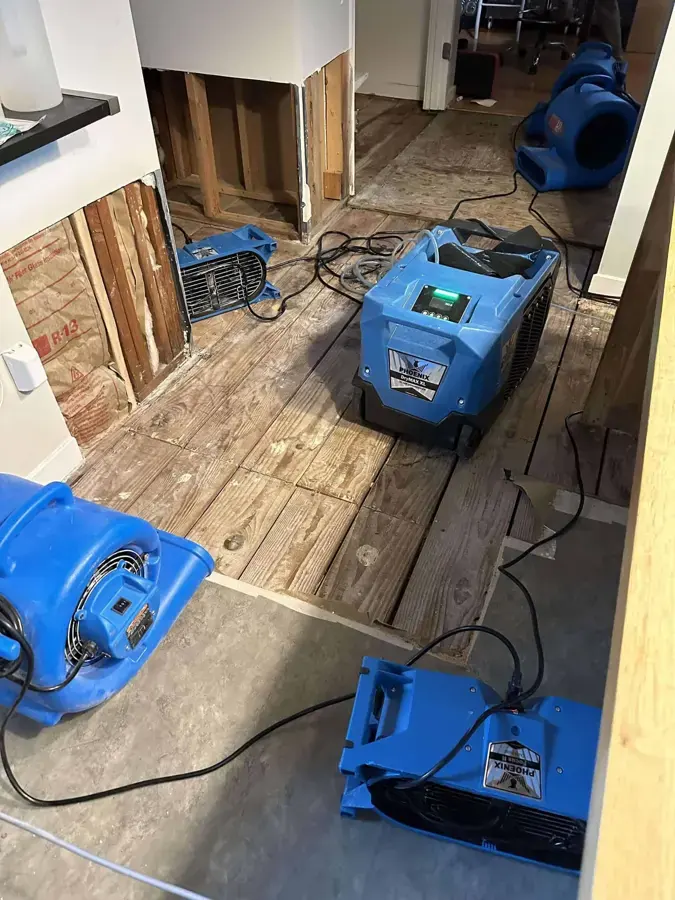
First steps for structural drying and dehumidification in Woodland
Map the moisture
The tech measures floors, walls and framing and marks which materials are wet.
Set the equipment
Air movers and dehumidifiers are placed to move dry air across each wet surface.
Check every visit
Temperature, humidity and moisture readings are logged and the equipment is adjusted.
Prove it is dry
Equipment leaves only when every material matches the dry reference.
How structural drying and dehumidification is handled in Woodland
Drying a building is a measured process, not a matter of running fans. Water sits in wood, concrete and drywall long after the surface feels dry, and structural drying is how that hidden moisture is pulled out and proven gone.
What does structural drying and dehumidification cost in Woodland, WA?
Structural drying runs $1,500 to $3,000 for one or two rooms, $3,000 to $5,500 for several rooms, and $5,500 to $12,000 for Class 4 or large losses. Material type drives the price.
One or two rooms
- Air movers and LGR unit
- Moisture map
- Daily readings
Several rooms
- Multiple LGR units
- Wall cavity drying
- Psychrometric logs
Class 4 or large loss
- Desiccant dehumidifiers
- Hardwood or concrete drying
- Complete claim file
Ranges are typical, not a quote: the water category, square footage, material class and how fast drying started move the number most. Run the water damage cost calculator for a closer range.
The structural drying and dehumidification process in Woodland
Moisture survey
Meters and a thermal camera find wet materials, and the readings become the baseline for the drying plan.
Equipment setup
Air movers and dehumidifiers go in by room size and material, with cavities opened where air must reach.
Monitoring
Each visit adds temperature, humidity and moisture readings, and the tech moves or adds equipment as needed.
Verification
Final readings are compared with the dry reference, equipment is removed, and the logs are filed for the claim.
The equipment that does the work
Air movers push dry air across wet surfaces, while dehumidifiers pull the moisture out of the air so it can keep absorbing more. Low-grain refrigerant units cover most jobs, and desiccant units handle cold spaces or dense materials like hardwood and concrete.
- Air movers aimed along walls, floors and cavities
- LGR dehumidifiers for standard drying
- Desiccant units for dense or cold materials
- Moisture meters and thermal cameras to steer placement
Drying a river-plain house
The city sits on a former floodplain with silt and sand loam soils, and after flood or sewer water the structure itself has to be dried through, including subfloors and wall bases. Surface moisture clears first, and the framing is slower.
That is why readings, not appearances, decide when the equipment leaves. A moisture map of each room shows where water is still hiding. See water extraction for the step that comes first.
How progress is proven
Each visit the tech records temperature, humidity and moisture in the affected materials, and compares them with a dry reference from an unaffected area. The log shows the drying curve and when it flattens out.
Those psychrometric logs also support the insurance claim, because an adjuster can see why equipment ran as long as it did. The drying time estimator gives a rough sense of the range.
Class 4 materials
Dense materials such as hardwood, plaster and concrete dry slowly and need desiccant equipment and patience. Rushing them leaves moisture inside.
Structural drying and dehumidification across Woodland and nearby communities
Dispatch runs 24/7 for Woodland, WA, day or night.
Drying crews work throughout ZIP 98674, including the central city, Scott Hill, the Pekin neighborhoods, Riverwalk at Lewis River and the homes beside Horseshoe Lake, the Lewis River and the Dike Access Road area.
The same service nearby: structural drying and dehumidification in Longview, Kalama, Kelso.
Structural Drying and Dehumidification questions in Woodland, WA
Water still spreading?
Building still damp after the water is out? A tech can measure it.
(888) 509-1696 Woodland drying helpHow does the crew know the building is dry?
Moisture readings from the affected materials are compared with readings from an unaffected area of the same building. When they match, the equipment can leave.
Why does drying equipment stay in place?
Wood, concrete and drywall release moisture slowly. Running the equipment until readings match a dry reference prevents trapped dampness, odors and swelling later.
What is the difference between an air mover and a dehumidifier?
Air movers push dry air across wet surfaces to speed evaporation, and dehumidifiers pull that moisture out of the air. Both are needed, because fans alone just move damp air around.
Does drying equipment raise the power bill?
It does use electricity, and the crew sets only the units the readings call for. Some policies cover the added cost as part of the loss, so the log of equipment and run time helps the claim.
Can hardwood floors and concrete be dried?
Often, with desiccant equipment and drying mats, though the process is slower. Readings show whether the material can be saved or whether it has to be replaced.
Is the noise from the equipment normal?
Yes. Air movers and dehumidifiers are loud, and they run continuously. The crew can place them to limit noise in bedrooms, and the tech explains which units can be switched off safely.
Dry the structure all the way through
Tell the crew what the water soaked and when it happened, and the drying team will plan the equipment, the moisture map and the daily readings that prove the job is done.
(888) 509-1696Plan the drying