Crawl Space Water Removal in Longview, WA
The extraction crew pumps standing water out from under local homes, pulls soaked insulation and vapor barrier, and dries the joists, beams and subfloor to a measured goal.
(888) 509-1696Pump out a Longview crawl space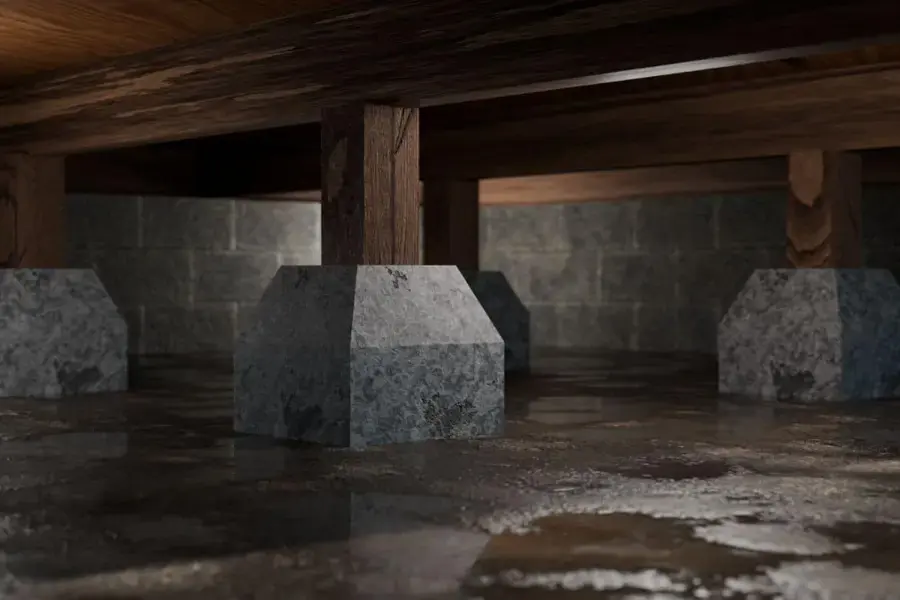
First steps for crawl space water removal in Longview
Look, do not crawl in
Check the crawl space from the access hatch with a flashlight, and stay out if water sits near wiring or a furnace.
Shut off the source
If a pipe is leaking under the floor, close the main water valve.
Cut power to that area
Turn off breakers for any crawl space outlets, pumps or heaters the water can reach.
Note the smell and floors
A musty smell or soft floors tell the walkthrough how long the water has been there.
How crawl space water removal is handled in Longview
The city was built on low, wet land where the Cowlitz River meets the Columbia, and many of its homes sit over crawl spaces. When heavy rain saturates the ground or a pipe leaks under the floor, the water collects where nobody looks, and the drying team treats it as a structural problem, not a puddle.
What does crawl space water removal cost in Longview, WA?
Crawl space water removal in Longview typically runs $1,000 to $4,000. The depth of the water, how much insulation and vapor barrier come out, the water category and the size of the crawl space set the number.
Pump-out and drying
- Standing water pumped out
- Air movers and dehumidifier
- Joist and subfloor readings
Insulation and barrier out
- Wet insulation bagged and removed
- Vapor barrier removed
- Framing dried in place
Category 3 or flood water
- Sewage or flood water
- Antimicrobial on framing and soil
- Full documentation
Ranges are typical, not a quote: the water category, square footage, material class and how fast drying started move the number most. Run the Longview water damage cost calculator for a closer range.
The crawl space water removal process in Longview
Inspection
The tech who does the walkthrough checks water depth, the source, wiring and the condition of the insulation and vapor barrier.
Pump-out
The extraction crew pumps standing water out through the access hatch and clears soaked debris.
Removal
The crew bags wet insulation and removes a flooded vapor barrier so the framing can dry.
Drying and readings
The drying team runs air movers and a dehumidifier and logs joist and subfloor readings daily until they reach the dry goal.
Where crawl space water comes from in Longview
The source decides the category of the water and the plan. The tech who does the walkthrough looks at the soil, the vapor barrier and the plumbing before any pump goes in.
- Saturated ground and runoff after long rainy stretches, most often from November through January
- Gutters and downspouts that empty against the foundation
- A split supply pipe or a failed water heater fitting under the floor, often after a hard freeze
- A leaking drain or side sewer pipe, which makes the water Category 3
Pumping, removal and drying under the house
The extraction crew pumps standing water out through the access hatch with submersible pumps. Soaked fiberglass insulation does not dry well in place, so the crew bags it and removes it, along with a torn or flooded vapor barrier.
With the water and wet materials out, the drying team runs air movers along the joist bays and a dehumidifier sized for the space, often with temporary plastic to hold the dry air in. Joists, beams and subfloor dry until they read within 2 to 4 points of a dry reference.
Moisture under the floor also drives humidity up into the living space, a link the EPA indoor air quality pages explain for homeowners.
Keeping the next storm out
Drying fixes the current loss. Keeping water out of the crawl space is a separate job for a drainage or foundation contractor, and the moisture map from the dry-out shows them where the water came in.
- Downspout extensions that carry water away from the foundation
- A crawl space sump pump with a working float switch
- An intact vapor barrier over the soil
- New insulation only after the framing reads dry
For a mapped flood zone at a specific address, FEMA flood map pages explain how to look up the current maps.
Crawl space water removal across Longview and Cowlitz County
Dispatch runs 24/7 for Longview, WA, day or night.
Longview Water Damage Restoration covers ZIP 98632, from the Civic Center, the Old West Side, St. Helens and the Highlands out to Olympic West, Cascade, Columbia Heights, West Longview and Mint Valley, plus the homes around Lake Sacajawea.
Nearby coverage reaches Kelso, Lexington, Castle Rock, Kalama, Woodland, Rainier, OR.
Related water damage services in Longview
Crawl Space Water Removal questions in Longview, WA
Water still spreading?
Water under the floor? The extraction crew pumps out crawl spaces 24/7.
(888) 509-1696 Longview crawl space pump-outIs some water in a crawl space normal after heavy rain?
No. A healthy crawl space stays dry. Standing water soaks the insulation, raises humidity under the floor and keeps the framing wet, and in the wet season here it rarely dries on its own.
Can wet crawl space insulation be dried and reused?
Rarely. Fiberglass batts that soaked up water sag, hold moisture against the subfloor and do not dry well in place. The crew removes them, and new insulation goes in after the framing reads dry.
Who fixes the drainage that let the water in?
A drainage or foundation contractor handles grading, gutters, sump pumps and vapor barriers. The restoration team handles the water: pumping it out, removing wet materials and drying the framing.
Is crawl space water covered by insurance?
Water from a sudden pipe leak is often covered. Ground water and flood water are usually treated differently and may need flood coverage. Coverage depends on your policy, so check with your own insurer.
How long does a crawl space take to dry?
Often several days to a week after the water is out, depending on how wet the joists and subfloor got and on the weather. The drying team removes equipment when readings reach a dry reference, not on a schedule.
Can I check my crawl space risk before calling?
Yes. The crawl space risk check scores the common warning signs, from a musty smell to a sump pump that runs all the time.
Get the water out from under the floor
Standing water under the house keeps joists and subfloor wet. The extraction crew pumps it out and the drying team dries what is left.
(888) 509-1696Longview crawl space help, any hour