Crawl Space Water Removal in Woodland, WA
Water trapped under a floor soaks insulation, joists and subfloor out of sight. The crew pumps it out, removes what is wet and dries the framing until readings settle.
(888) 509-1696Schedule a crawl space check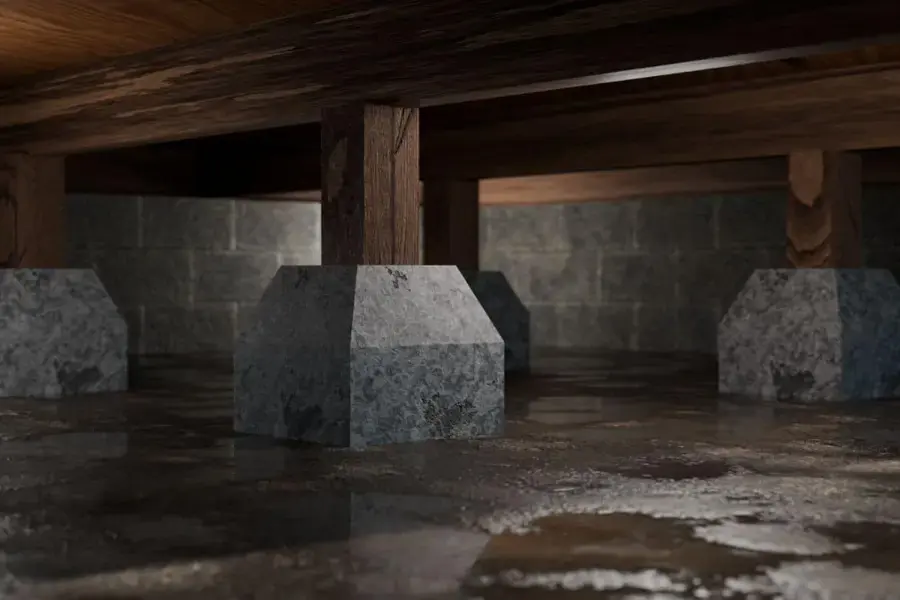
First steps for crawl space water removal in Woodland
Inspect the space
A tech enters with a light and moisture meter, finds the deepest water and checks insulation, barrier and framing.
Close the main
If a pipe or tank is feeding the water, the supply is shut off first so pumps are not fighting a running leak.
Pump and remove
Submersible pumps clear standing water, then soaked insulation and damaged barrier are bagged and taken out.
Dry the framing
Air movers and a dehumidifier run under the floor until joist and subfloor readings match a dry reference.
How crawl space water removal is handled in Woodland
A flooded crawl space rarely announces itself. The first signs are often a damp smell, a cold floor or a sag in the insulation, and by then the framing above has usually been absorbing moisture for a while.
What does crawl space water removal cost in Woodland, WA?
Crawl space jobs run $1,000 to $2,500 for pump-out and drying, $2,500 to $5,000 when insulation and barrier come out, and $5,000 to $10,000 for sewage or flood water. Depth and contamination set the range.
Pump-out and drying
- Standing water pumped
- Dehumidifier and air movers
- Joist moisture readings
Insulation and barrier out
- Soaked insulation bagged
- Barrier removed
- Framing dried in place
Sewage or flood water
- Category 3 water
- Antimicrobial on framing
- Complete claim file
Ranges are typical, not a quote: the water category, square footage, material class and how fast drying started move the number most. Run the water damage cost calculator for a closer range.
The crawl space water removal process in Woodland
Inspection
The tech photographs the space, measures moisture in joists and subfloor, and notes where water entered so the cause is documented.
Pump-out
Submersible pumps move the water out through hoses, and the tech watches the level until the soil surface is exposed.
Removal
Wet insulation, torn vapor barrier and any contaminated debris are bagged and carried out for disposal.
Drying and readings
Equipment is placed under the floor, readings are logged every visit, and the crew keeps going until the framing matches a dry reference.
Why the space under the floor floods
The city plan describes the river plain soils as mostly silt and sand loams, and it calls the local ground water system interconnected. Where a home has a crawl space, those conditions let water move in after storms and river rises.
- Rain that soaks through the soil and collects at the low point
- High ground water pushing up around footings
- A leaking pipe or water heater draining below the floor
- Flood water entering through vents after the Lewis River rises
What the crew does
The tech enters with lights and a moisture meter, finds the deepest water and sets submersible pumps. When the standing water is gone, soaked insulation is bagged and carried out, and torn or soaked vapor barrier is removed.
Joists and the underside of the subfloor are the priority, because they are costly to replace and dry slowly. The crew points air movers and a dehumidifier at the framing and keeps readings until it matches a dry reference. See how structural drying is measured.
Prevention and records
Once the space is dry, the crew can note where water entered and whether the moisture came from the soil, a pipe or a flooded river. That note goes in the claim record with photos and readings.
The crawl space risk check helps weigh a space that stays damp, and the team can tell when a plumber or a drainage fix should come next.
Sewage changes the plan
If the water under the floor came from a sewer backup or from flood water, the framing and soil need antimicrobial treatment and containment, and the work follows the Category 3 steps.
Crawl space water removal across Woodland and nearby communities
Dispatch runs 24/7 for Woodland, WA, day or night.
Crawl space work reaches homes across ZIP 98674, including the neighborhoods near the Lewis River, East Woodland, Pekin, Scott Hill and the streets around Horseshoe Lake, Riverwalk at Lewis River and the Dike Access Road area.
The same service nearby: crawl space water removal in Longview, Kalama, Kelso.
Crawl Space Water Removal questions in Woodland, WA
Water still spreading?
Water under the floor? A tech can check joists and insulation with a meter.
(888) 509-1696 Call about crawl spacesHow do I know water is under my floor?
A musty smell, a cool or spongy floor, sagging insulation or a rise in indoor humidity are the common signs. A tech with a meter can confirm moisture in the joists from below.
Is standing water in a crawl space an emergency?
It should be handled quickly, because wet insulation and framing hold moisture against the floor above. The longer it sits, the more material needs to be replaced.
Does wet insulation have to be replaced?
In most cases yes. Soaked insulation stays heavy and damp, pulls away from the joists and keeps moisture against the wood, so it is bagged and removed before drying starts.
Can the crew dry a crawl space without removing the vapor barrier?
Sometimes. If the barrier is intact and clean it can stay, but torn, soaked or contaminated sheeting is removed so the soil and framing can dry.
Will drying stop water from coming back?
Drying removes the moisture already there. Whether water returns depends on the cause, so the crew notes the entry point and says when a drain, a grade fix or a pipe repair is needed.
Do river rises affect crawl spaces here?
They can. A rising Lewis River and a saturated floodplain push ground water upward, and flood water is treated as Category 3, with antimicrobial work on framing and soil.
Get the water out from under the house
Describe what you see under the floor and the crew will explain the pump-out, the removal and the drying that protects the joists above it.
(888) 509-1696Talk to a crawl space tech