Structural Drying and Dehumidification in Kelso, WA
Water that is wiped up is not water that is gone. The drying team uses dehumidifiers and air movers to pull moisture from framing, floors and walls until readings say dry.
(888) 509-1696Start drying my structure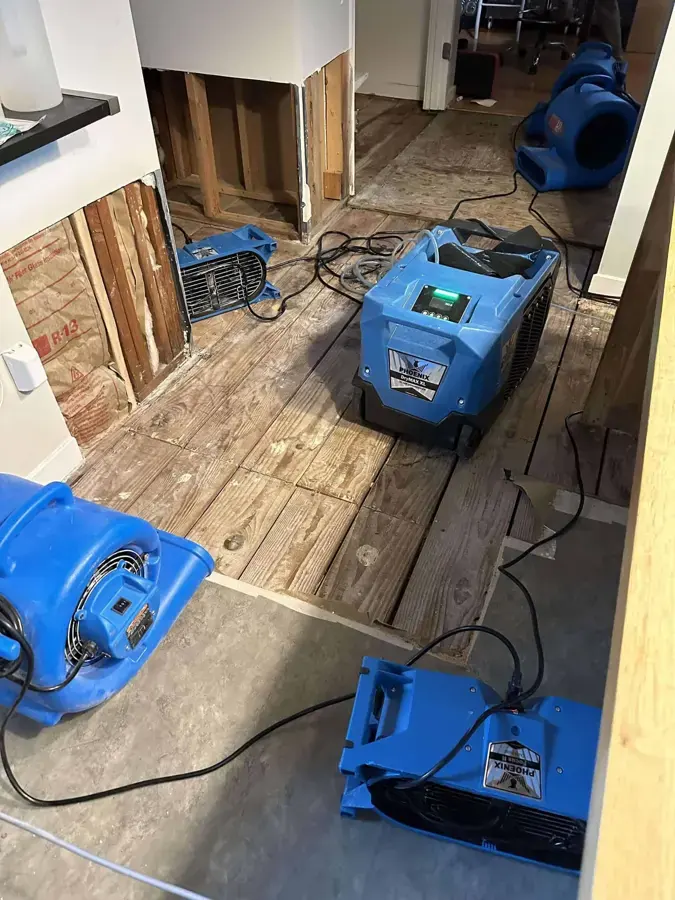
First steps for structural drying and dehumidification in Kelso
Stop the source
Make sure the leak is fixed and the water is shut off before any equipment goes in.
Keep doors closed
Close the rooms being dried so the equipment works on a smaller volume of air.
Leave equipment alone
Do not move or unplug dehumidifiers and air movers, since readings depend on steady operation.
Report changes
Tell the team about new stains, smells or damp spots so the plan can adjust.
How structural drying and dehumidification is handled in Kelso
Drying is a measured process, not a guess. Water that has soaked into framing, subfloor and wall cavities leaves only when warm, dry air moves across it and the humidity is pulled out of the room. The City of Kelso comprehensive plan describes a relatively old housing stock, and drying plans have to fit older construction. Equipment is placed from a moisture map and adjusted every day.
What does structural drying and dehumidification cost in Kelso, WA?
Structural drying typically costs $1,500 to $12,000. The cost follows the number of wet rooms, the equipment count and the materials involved, with Class 4 jobs and hard floors at the high end.
One or two rooms
- LGR unit and air movers
- Moisture map made
- Daily readings
Several rooms
- Multiple LGR units
- Wall cavity drying
- Psychrometric logs kept
Class 4 or large loss
- Desiccant dehumidifiers
- Hardwood or concrete drying
- Complete claim file
Ranges are typical, not a quote: the water category, square footage, material class and how fast drying started move the number most. Run the water damage cost calculator for a closer range.
The structural drying and dehumidification process in Kelso
Moisture mapping
The tech who does the walkthrough meters every wet surface, sketches the affected rooms and sets a dry reference from unaffected materials.
Equipment setup
LGR or desiccant dehumidifiers and air movers are sized and placed to move air across each wet surface.
Cavity drying
Wall cavities and subfloors are vented, opened or injected with dry air where meters show moisture.
Daily monitoring
Readings and psychrometric logs are taken daily, and equipment is moved or removed as rooms reach a dry standard.
How structural drying works
Dehumidifiers pull moisture from the air, air movers push dry air across wet surfaces, and meters track the moisture leaving the materials.
- Moisture map drawn before any equipment is placed
- LGR dehumidifiers sized to the volume of wet air
- Air movers aimed along walls, floors and cabinet bases
- Wall cavities opened, vented or injected with dry air
Older houses, careful drying
Older survey figures cited in the city plan put about 50% of housing units in structures built before 1960. Older framing, layered flooring and thick finishes all dry at different rates, so one setting does not fit every room.
That is why readings direct the work rather than a calendar. The drying team compares each wet material with a dry reference, moves equipment as rooms dry and keeps going only as long as the readings need. A fixed schedule would be a guess, because water volume, materials and humidity differ from one loss to the next.
Heavy losses and hard floors
Class 4 losses involve dense, slow-drying materials such as hardwood, concrete and plaster, and they often call for desiccant dehumidifiers that work at low humidity. Hardwood floors can be dried with mats and panels rather than torn out.
Equipment runs around the clock, so noise and power use are part of the job. The crew explains which rooms are in use, checks the dehumidifier condensate and logs temperature and humidity every visit. After a storm or flood loss, drying follows cleanup and the removal of contaminated materials.
Why logs matter
Daily psychrometric logs show temperature, humidity and moisture readings over time. They prove that the structure reached a dry standard, and they give an insurer a clear record to read.
Structural drying and dehumidification across Kelso and nearby communities
Dispatch runs 24/7 for Kelso, WA, day or night.
In Kelso, the drying team sets up equipment in houses and small buildings across ZIP 98626, from Rose Valley and Butler Acres to Aldercrest-Banyon, Davis Terrace and Mt. Brynion, plus the streets around Three Rivers Golf Course.
The same service nearby: structural drying and dehumidification in Longview, Kalama, Castle Rock.
Structural Drying and Dehumidification questions in Kelso, WA
Water still spreading?
Water cleaned up but the house still feels damp? The drying team can measure what is left.
(888) 509-1696 Reach the drying teamHow is dry confirmed?
Meters compare each wet material with a dry reference taken from an unaffected part of the house. Drying stops only when the readings match, and the logs record the result.
Can fans alone dry a wet room?
Fans move air, but without a dehumidifier the moisture just recirculates. Dehumidifiers remove it, and meters confirm that walls and floors have actually let it go.
Why does the equipment run so long?
Moisture inside framing, subfloor and insulation leaves slowly. Surfaces can feel dry while wood still holds water, so the equipment stays until the readings, not the touch, say dry.
Can hardwood floors be saved?
Often, if the water is clean and caught early. Drying mats and panels pull moisture through the boards, though badly cupped or crowned flooring may still need replacement.
Does an older house dry differently?
Older framing, layered flooring and thick finishes can hold water longer. Older survey figures put about 50% of local housing units in structures built before 1960, so drying plans adjust to what is in the walls.
What is a Class 4 loss?
Class 4 means water has soaked into low-permeance materials such as hardwood, concrete or plaster. These dry slowly and usually need desiccant dehumidifiers and specialized drying setups.
Dry the structure, not just the surface
The team maps moisture, places dehumidifiers and air movers and logs readings daily, so walls, floors and framing are dry before anything is closed up.
(888) 509-1696Book structural drying