Water Extraction and Removal in Kalama, WA
Standing water gets pumped out first, then carpet and pad are lifted and drying equipment is set, so downtown shops and hillside homes stop absorbing moisture.
(888) 509-1696Pump out the wet floor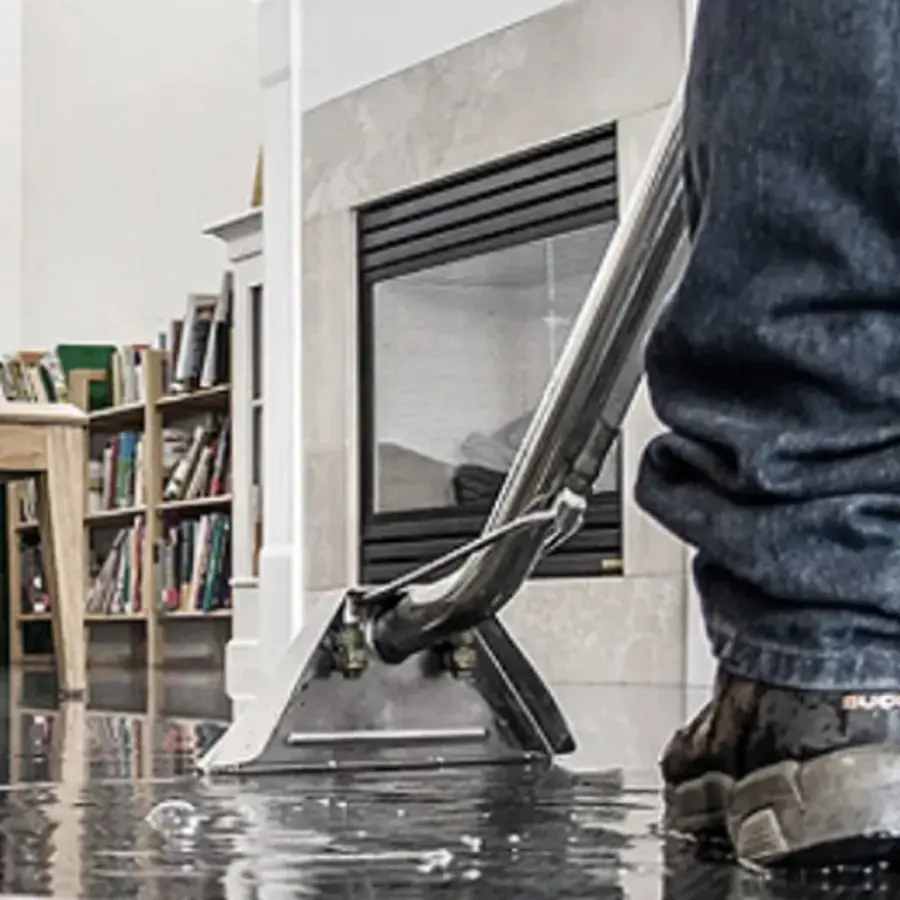
First steps for water extraction and removal in Kalama
Stop the source
Close the shutoff for any pipe, hose or fixture feeding the water, then keep clear of standing water near outlets and cords.
Clear the floor
Lift small furniture, rugs and electronics out of the wet area so the crew has room to work.
Take photos
Photograph the wet floor and anything damaged before it moves, because dated images show the starting condition.
Skip the shop vacuum
Household vacuums and fans spread contamination, so extraction is better left to the crew.
How water extraction and removal is handled in Kalama
Standing water on a floor does not stay there. It wicks into baseboards, wall bottoms, subfloors and the pad under carpet, and the longer it sits, the more of the building takes it on. Downtown has seen this before: the Columbia River flood of 1996 left more than 2 feet of water in the business district.
What does water extraction and removal cost in Kalama, WA?
Price follows the area wet and the water type. One room or less runs $500 to $1,200, several rooms $1,200 to $2,500, and a whole floor or Category 3 loss $2,500 to $6,000.
One room or less
- Standing water pumped from one area
- Carpet lifted and pad checked
- Drying equipment placed
Several rooms
- Truck-mounted pumping
- Wet pad cut out and removed
- Moisture mapped room by room
Whole floor or Category 3
- Contaminated or large-volume water
- Carpet and pad hauled out
- Antimicrobial treatment and containment
Ranges are typical, not a quote: the water category, square footage, material class and how fast drying started move the number most. Run the water damage cost calculator for a closer range.
The water extraction and removal process in Kalama
Walkthrough
The tech traces the water, checks its category and takes moisture readings in floors, walls and cabinets.
Extraction
Truck-mounted units or portable pumps remove standing water, then a weighted pass pulls what the carpet still holds.
Removal
Pad and other materials that cannot be dried are cut out and carried from the room so they stop feeding moisture into the air.
Dry and verify
Air movers and dehumidifiers go in, and the team returns to log readings until the structure matches its dry reference.
How the extraction crew works
The crew locates the water first, then picks the tool. Truck-mounted units handle large volumes and long carpet runs, while portable pumps and wands reach closets, stairs and tight rooms.
Extraction also protects the rest of the structure. Water pulled from carpet and pad before it wicks upward keeps wall bottoms and baseboards from taking on moisture, which cuts the amount of drywall that has to be opened later.
- Standing water pumped off the floor surface
- Carpet lifted and pad pulled when it has soaked through
- Hard floors vacuumed along the edges and thresholds
- Moisture readings taken before equipment is set
When the water is not clean
River, creek and storm water carry contamination, so porous materials are removed instead of saved. In December 2025, river water flooded Camp Kalama, an RV park off Meeker Drive, a reminder that flood water reaches well beyond the downtown core.
Gray water from a washer or dishwasher gets similar caution, and clean water from a supply hose can degrade in carpet and cabinet bases. The category decides what stays and what goes.
After the water is out
Extraction is the start, not the finish. Once the bulk water is gone, the drying team maps moisture, places air movers and dehumidifiers, and returns for readings until framing and subfloor reach their dry targets. Structural drying covers that stage, and the drying time estimator gives rough durations.
Why speed matters
Mold can begin to grow after 24 to 48 hours on damp materials, so early extraction shortens the drying job and keeps more of the house in place.
Water extraction and removal across Kalama and nearby communities
Dispatch runs 24/7 for Kalama, WA, day or night.
Extraction crews work from Downtown Kalama, China Gardens and Columbia Terrace Estates to the Meeker Drive area, the Cloverdale Road corridor and the hillside neighborhoods above them, all within ZIP 98625 in Cowlitz County.
The same service nearby: water extraction and removal in Longview, Kelso, Woodland.
Water Extraction and Removal questions in Kalama, WA
Water still spreading?
Standing water somewhere in the building? Describe it and a crew gets planning.
(888) 509-1696 Report standing waterHow is extraction different from drying?
Extraction removes liquid water with pumps and vacuums, which is quick and takes out most of the volume. Drying then pulls moisture from materials that feel damp but are no longer wet to the touch.
Can wet carpet be saved?
Clean water caught early often allows carpet to be lifted, the pad replaced and the carpet dried and reset. Carpet soaked by gray or black water is usually discarded because contamination stays in the fibers.
What if water is still coming in?
The source has to be stopped first, whether that means a valve, a pump or a roof repair. Extraction works best once the source is controlled, because otherwise the floor refills as fast as it is cleared.
Is outside flood water handled the same way?
Storm and river water is treated as contaminated, so porous materials come out and hard surfaces get cleaned and treated. Larger events fall under storm and flood cleanup, which adds debris removal and flood cuts.
How does the crew know the floor is dry?
Moisture meters give numbers, not guesses. Readings from an unaffected area set the target, and work continues until the wet materials match it. Equipment stays in place until that happens.
What about water under the floor?
Low spaces with standing water are pumped with submersible equipment and then dried with air movers placed for that space. Crawl space water removal covers that work in detail.
Clear the floor before it soaks in
Standing water soaks deeper the longer it stays, and extraction is the step that stops it. Tell the crew where the water sits and what it came from.
(888) 509-1696Schedule an extraction walkthrough