Water Extraction and Removal in Castle Rock
Standing water on carpet, subfloors and tile comes out first. The extraction crew then maps moisture and sets drying equipment so the structure dries after rain, leaks or a rising river.
(888) 509-1696Request water removal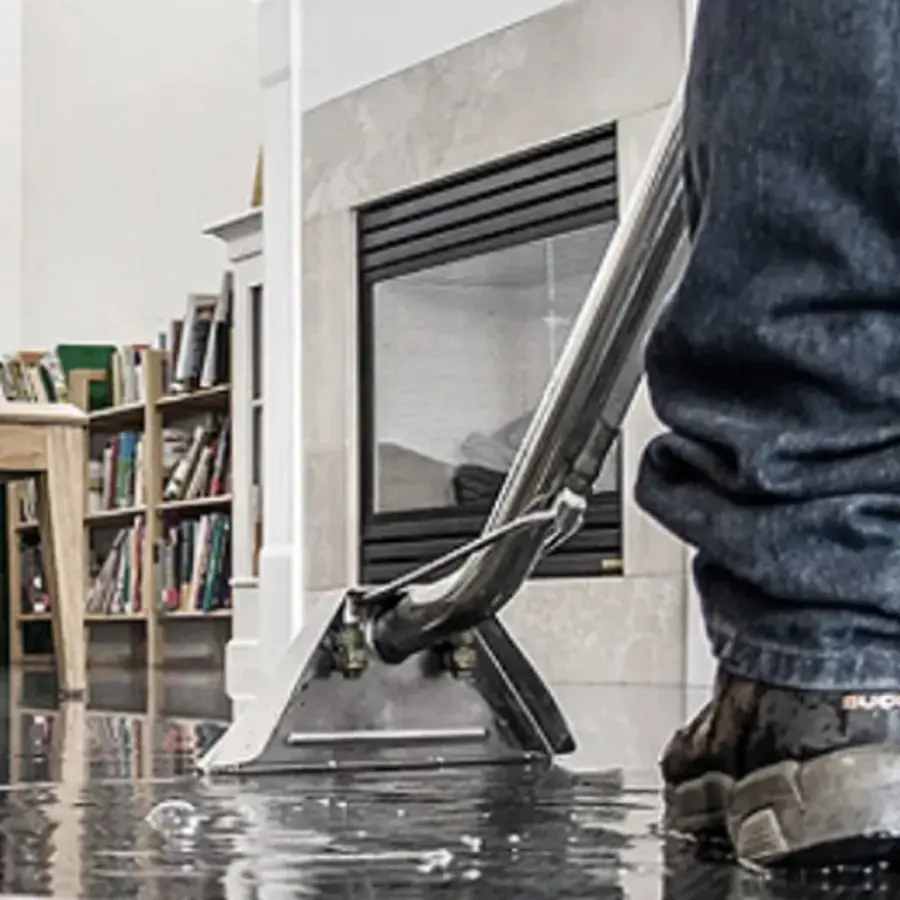
First steps for water extraction and removal in Castle Rock
Walkthrough
The tech finds the source, checks how far the water traveled and takes readings on floors and lower walls.
Shut off the source
A leaking pipe or appliance is closed at the valve so no more water enters while extraction begins.
Extract the water
Truck-mounted and portable units pull standing water and carpet moisture until the surface stops giving up water.
Hand off to drying
Air movers and dehumidifiers go in, readings are logged each visit and equipment leaves once dry levels are confirmed.
How water extraction and removal is handled in Castle Rock
Water that sits on a floor soaks into carpet pad, subfloor and the bottom of walls before most people can react. Close to 60 inches of precipitation falls here in a year, so the extraction crew treats removal as the step that decides how much material can be saved.
What does water extraction and removal cost in Castle Rock, WA?
Extraction alone runs $500 to $1,200 for one room or less, $1,200 to $2,500 for several rooms and $2,500 to $6,000 for a whole floor or Category 3 water, depending on how much carpet and pad must go.
One room or less
- Standing water in one room
- Carpet lifted and extracted
- Drying set placed
Several rooms
- Truck-mounted extraction
- Wet pad taken out
- Moisture map of rooms
Whole floor or Category 3
- Large or contaminated water
- Carpet and pad removed
- Antimicrobial and containment
Ranges are typical, not a quote: the water category, square footage, material class and how fast drying started move the number most. Run the water damage cost calculator for a closer range.
The water extraction and removal process in Castle Rock
Walkthrough
The tech walks the wet areas, notes the water category and takes readings so removal can be scoped before any equipment is unloaded.
Extraction
Truck-mounted and portable extractors remove standing water, and carpet is lifted so water trapped in the pad can come out.
Removal
Pad and other soaked materials that cannot dry in place are cut out and bagged, and baseboards are pulled to expose wall bottoms.
Drying and readings
Air movers and dehumidifiers run while readings are logged each visit, and the final dry numbers are documented for the claim.
How the extraction crew removes water
A truck-mounted extractor pulls the most water through long hoses, while portable units reach stairs, closets and rooms the truck hose cannot. An extraction wand glides over carpet, and a squeegee tool handles tile and sealed wood.
- Carpet is lifted and the pad is removed when it cannot dry in place
- Hard floors are vacuumed and checked for water under the boards
- Baseboards come off so the bottoms of walls can be inspected
Why local conditions matter
The city sits on river alluvium beside the Cowlitz River, and about 80% of the yearly precipitation arrives from October through March. Winter is when standing water most often needs pulling out.
When the river runs high, the National Weather Service expects buildings to flood from 51 feet, mostly west of the river along Highway 411 and around Four Corners. River water is Category 3, so it follows a different cleanup path than a clean supply leak.
After the water is out
Extraction is the first half of the job. Wet materials left behind keep releasing moisture, so the crew uses a moisture meter to map what is still wet, then sets air movers and dehumidifiers. See structural drying for that second phase.
Clean water or not
Water from a supply pipe starts clean, while storm runoff, river water and sewage do not. The category sets how much carpet and drywall must be removed instead of dried.
Water extraction and removal across Castle Rock and nearby communities
Dispatch runs 24/7 for Castle Rock, WA, day or night.
The extraction crew works across the city, including downtown, the Exit 49 area, Huntington Avenue South and the Four Corners area west of the river, with jobs in ZIP code 98611 and nearby Cowlitz County.
The same service nearby: water extraction and removal in Longview, Kelso, Kalama.
Water damage restoration in Castle Rock · every town covered
Related water damage services in Castle Rock
Water Extraction and Removal questions in Castle Rock, WA
Water still spreading?
Standing water keeps soaking into the structure until it is pulled out.
(888) 509-1696 Call dispatchHow soon should standing water be removed?
As soon as it is safe, since wet drywall, pad and wood can begin growing mold within 24 to 48 hours. The sooner extraction starts, the more flooring and wall material can stay.
Can wet carpet be saved?
Often, when the water was clean and extraction began promptly, the carpet can be lifted, cleaned and dried while the pad is replaced. Carpet soaked in sewage or river water is normally removed.
What is the difference between extraction and drying?
Extraction physically removes liquid water with pumps and extractors. Drying then pulls the moisture left in materials and air using air movers and dehumidifiers, which is covered under structural drying.
Is river water handled differently?
Yes. River and storm runoff are Category 3, so carpet and pad usually go, lower walls may be cut and surfaces are treated. See storm and flood water cleanup for the full process.
Does extraction work on hardwood floors?
Specialized tools pull water from the surface and the gaps between boards, and drying mats can draw moisture from within. Cupped or buckled boards may still need replacement if water sat too long.
How does the crew know the job is done?
Moisture readings on floors and wall bottoms are compared with a dry reference and logged on each visit. Equipment leaves only when the numbers match.
Get the water out of the building
Dispatch passes the details to an extraction crew that removes the water, lifts what cannot stay and sets drying equipment with readings kept for the claim.
(888) 509-1696Talk to an extraction crew