Crawl Space Water Removal in Castle Rock
Water under a floor sits unseen while insulation soaks it up and joists stay wet. The crew pumps it out, removes soaked material and dries the framing with readings.
(888) 509-1696Request a pump-out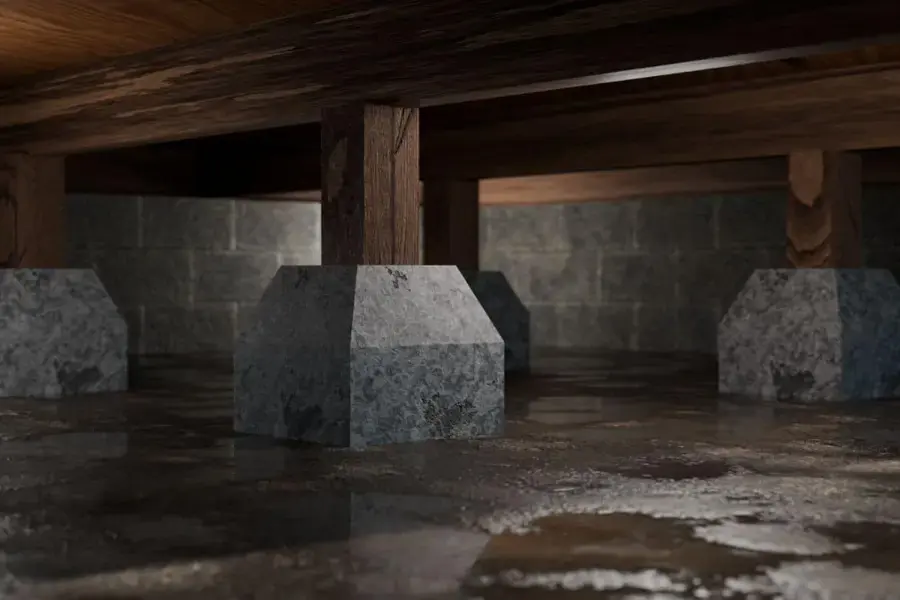
First steps for crawl space water removal in Castle Rock
Look under the floor
The tech enters the crawl space, finds the depth of the water, notes the source and takes moisture readings on joists and subfloor.
Shut off the source
A leaking supply pipe is closed at the valve first so the space does not refill while the pump runs.
Pump and remove
A submersible pump drops the water, then soaked insulation and a ruined vapor barrier are bagged and carried out.
Dry and verify
Air movers and dehumidifiers run until joist readings level off, and the crew documents the numbers for the file.
How crawl space water removal is handled in Castle Rock
Water under a house is easy to miss because nobody walks there. It can sit for weeks, soaking insulation and wetting joists and the underside of the subfloor, while damp air rises into the rooms above.
What does crawl space water removal cost in Castle Rock, WA?
Pump-out and drying runs $1,000 to $2,500, removing insulation and the barrier runs $2,500 to $5,000, and flood or sewage water reaches $5,000 to $10,000 because framing and soil need treatment.
Pump-out and drying
- Water pumped from the floor space
- Dehumidifier and air movers
- Joist readings taken
Insulation and barrier out
- Wet insulation bagged and hauled
- Barrier cut out
- Framing dried in place
Category 3 or flood water
- Sewage or river water present
- Framing and soil treated
- Documented for the claim
Ranges are typical, not a quote: the water category, square footage, material class and how fast drying started move the number most. Run the water damage cost calculator for a closer range.
The crawl space water removal process in Castle Rock
Inspection
The tech checks water depth, wet materials and the likely source, then maps moisture on joists and subfloor with a meter.
Pump-out
A submersible pump clears the standing water, and a wet vacuum lifts what remains on the barrier and soil.
Removal
Soaked insulation is bagged and a failed vapor barrier is cut out, with Category 3 areas isolated first.
Drying and readings
Dehumidifiers and air movers run under and above the floor, and joist readings are logged on each visit until they reach the dry reference.
Pump-out and removal
A submersible pump clears the standing water first, and a wet vacuum takes the last of it off the soil and barrier. With the water gone, the crew can see what the damage really is. Depth matters here, since a few inches calls for a different pump setup than a fully flooded space.
- Wet insulation is bagged and carried out, since it holds water against the joists
- A torn or soaked vapor barrier is cut out and set aside for replacement
- Joists and subfloor are probed with a moisture meter before drying starts
- Sewage or flood water triggers Category 3 steps, including treatment of framing and soil
Why the wet season matters
In Castle Rock, about 80% of the area's close to 60 inches of yearly precipitation falls from October through March, and the ground is river alluvium of sand, gravel and silt beside the Cowlitz River.
Foundations vary from home to home, so the tech looks under each floor before choosing between a pump-out alone and full removal with drying. The crawl space risk check helps a homeowner spot warning signs first.
Drying the framing
Wood framing releases water slowly, so dehumidifiers and air movers run in the crawl space or the rooms above until joist readings match a dry reference.
A new vapor barrier waits until the framing is dry, because covering wet wood traps moisture and invites the mold the drying was meant to prevent.
Flood water is different
When river or storm water reaches a crawl space, it carries silt and bacteria. The crew treats it as Category 3, removes soaked insulation and applies antimicrobial to framing and soil.
Crawl space water removal across Castle Rock and nearby communities
Dispatch runs 24/7 for Castle Rock, WA, day or night.
Crawl space jobs cover homes across the city, from the downtown area and Huntington Avenue South to Green Acres and Four Corners west of the river, plus the rest of ZIP code 98611 and nearby Cowlitz County.
The same service nearby: crawl space water removal in Longview, Kelso, Kalama.
Water damage restoration in Castle Rock · every town covered
Related water damage services in Castle Rock
Crawl Space Water Removal questions in Castle Rock, WA
Water still spreading?
Water under the floor keeps spreading until someone pumps it out.
(888) 509-1696 Call dispatchIs standing water under a house an emergency?
It should be handled promptly. Water left under a floor keeps wetting joists, and mold can begin in 24 to 48 hours in wet wood and insulation. A pump-out starts the drying work.
Does wet insulation have to come out?
Usually yes. Fiberglass soaked by standing water presses against the subfloor, holds moisture and rarely dries in place, so the crew bags it and removes it before the framing is dried.
Can the vapor barrier stay in place?
A barrier that is torn, soaked on the soil side or covered in silt comes out so the ground and framing can dry. A new barrier goes in only after readings show the wood is dry.
What if the water came from the Cowlitz River?
River water counts as Category 3, so the crew treats framing and soil with antimicrobial and removes soaked insulation. Buildings begin to flood at 51 feet on the gauge, mostly west of the river.
What if a home has no crawl space at all?
The same water removal and drying steps apply to a slab or lower floor, and the walkthrough sorts out where the water actually sits. See water extraction for those jobs.
How is the dry point proven?
Moisture readings on joists and subfloor are logged each visit and compared with a dry reference, and equipment stays until the numbers level out, with the log kept for the insurer.
Get the crawl space pumped and dried
Dispatch passes the details to a crew that pumps standing water, removes soaked insulation and keeps readings on the framing until it is dry.
(888) 509-1696Reach a crew now