Crawl Space Water Removal in Vernonia, Oregon
Raised homes keep crawlspaces below the living floor, where water can sit unseen. Pumps, insulation removal and drying keep that hidden water from rotting the framing above.
(888) 509-1696Call about crawl space water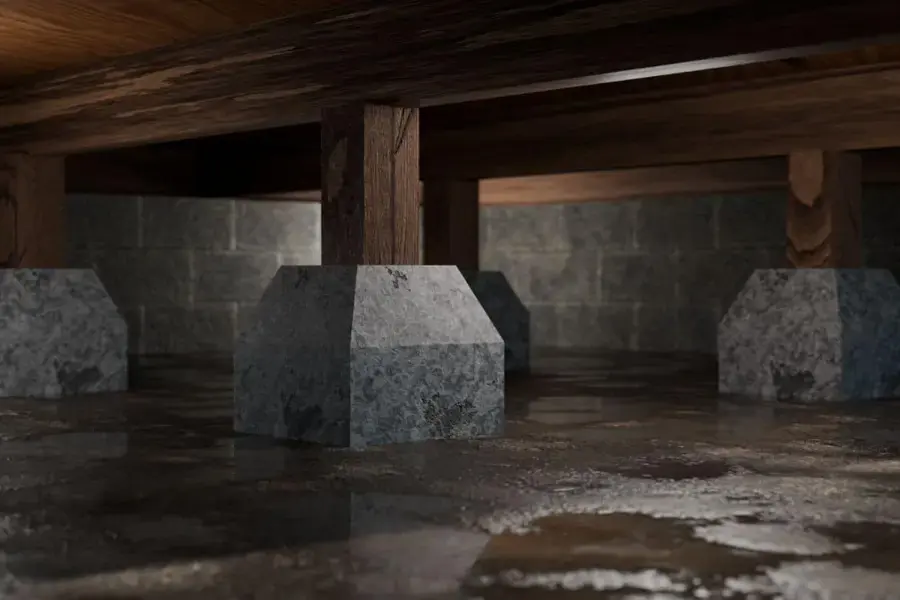
First steps for crawl space water removal in Vernonia
Stay out of the space
Do not climb in while it holds water or sewage. Power to the crawl space should be off before anyone enters.
Close the main
If a pipe is the source, shut off the main valve so the water stops rising before pumps are set.
Note the water level
Photograph the hatch and any visible water level, and mention how long it has been wet.
Keep the hatch clear
Move stored items away from the access point so the crew can get pumps and hoses in.
How crawl space water removal is handled in Vernonia
After the December 2007 flood, all but a handful of the Vernonia homes that had flooded were raised, which left crawlspaces and garages sitting beneath the living floor. Those spaces collect storm runoff and rising river water, and what pools there seldom stays below the floor for long.
What does crawl space water removal cost in Vernonia, WA?
A crawl space pump-out and drying usually costs $1,000 to $2,500, rising to $10,000 when insulation, barrier and framing work are needed or flood water is involved, with the volume of water setting the difference.
Pump-out and drying
- Water pumped to the surface
- Dehumidifier and air movers
- Joist moisture checked
Insulation and barrier out
- Soaked insulation hauled off
- Barrier pulled and dried
- Framing dried in place
Category 3 or flood water
- Dirty or river water
- Soil and framing treated
- Complete job records
Ranges are typical, not a quote: the water category, square footage, material class and how fast drying started move the number most. Run the water damage cost calculator for a closer range.
The crawl space water removal process in Vernonia
Inspection
A tech enters through the hatch with a meter and light, maps wet joists and subfloor, and finds where the water came from.
Pump-out
Submersible pumps move the water out through hoses, and the low spots get a second pass.
Removal
Wet insulation comes down and goes into bags, and a soaked vapor barrier is lifted for drying.
Drying and readings
Dehumidifiers run until joists and subfloor read dry, and each visit adds a new set of numbers to the file.
Not meant for storage
The city says crawlspaces and garages under elevated homes are not meant for storage. Some residents who kept belongings there lost them in the 2015 flood, which is a good reason to keep those spaces clear and easy to inspect. Raising a house lifts the living floor, but the ground below it stays where it was, so water still finds a way in.
- Standing water is pumped out with submersible pumps
- Soaked insulation is cut down and bagged
- Plastic vapor barrier is lifted, dried and judged for reuse
- Joists and subfloor are dried in place with air movers
What the crew checks
The crew starts at the access hatch, reads moisture in the joists and subfloor from below, and traces where the water entered, whether a pipe, a downspout outlet or river overflow. Many crawlspaces also hold supply pipes, heating ducts and wiring, so the tech notes anything the water has touched before pumps start.
River water is treated as contaminated, so protective gear comes first and soil, framing and any remaining insulation get an antimicrobial. A plain pump-out of clean water is simpler and quicker.
Drying a space nobody sees
Equipment is placed so dry air actually moves through the space, with dehumidifiers matched to its volume and readings taken at the same spots on each visit. Because nobody walks through the space, the crew documents it with photos from the hatch, which also shows an adjuster what the floor sat above.
Bigger losses continue into structural drying, and river water adds the steps in storm and flood cleanup.
Check the floor above
Cupped hardwood, soft spots or a stale smell upstairs often mean the space below has been wet for a while. Mention them during the walkthrough so the readings cover them.
Crawl space water removal across Vernonia and nearby communities
Dispatch runs 24/7 for Vernonia, WA, day or night.
Crawl space work covers ZIP 97064 and the lower streets near the Nehalem River, including Madison Avenue, Jefferson Avenue and Adams Avenue, plus the creek roads at the edge of the valley.
The same service nearby: crawl space water removal in Longview, Kalama, Woodland.
Crawl Space Water Removal questions in Vernonia, WA
Water still spreading?
Water under the house? A call starts the pump-out.
(888) 509-1696 Vernonia crawl space helpWhy do raised homes still get crawl space water?
Raising a house lifts the living floor, not the ground beneath it. Storm runoff, a leaking pipe or river water can still enter the space below. A downspout that empties near the foundation, a leaking pipe or a river rise can each put water there.
Can insulation be saved?
Insulation that soaked usually loses its value and holds moisture against the floor. It is cut down and bagged so the framing can dry, and new insulation goes in after the readings are dry.
Is it safe to look myself?
Not when water is present. The space may hold contamination, loose wiring or a weak access point, so the crew enters with protective gear. Wet insulation can also hang low and hide hazards.
What about the vapor barrier?
A clean barrier can often be lifted, dried and put back. A torn or dirty one is removed so the soil and framing can dry properly.
Does crawl space water cause problems upstairs?
It can. Moisture rises into subfloors and flooring, which is why cupping, soft spots and a stale smell upstairs are worth reporting.
Where does this fit with flood cleanup?
River water in a crawlspace is a flood job. Water extraction and the contaminated-water steps apply before drying begins.
Dry the space under your floor
Hidden water keeps working on joists and subfloor while nobody watches. One call gets pumps, a moisture map and a drying plan moving for homes in Vernonia.
(888) 509-1696Start the pump-out