Ceiling Leak Water Damage in Kalama, WA
A wet ceiling can come from the roof, an upstairs bathroom or a neighbor's unit, so the crew traces the source, drains the ceiling, removes failed drywall and dries the walls and floor framing below.
(888) 509-1696Request a ceiling leak walkthrough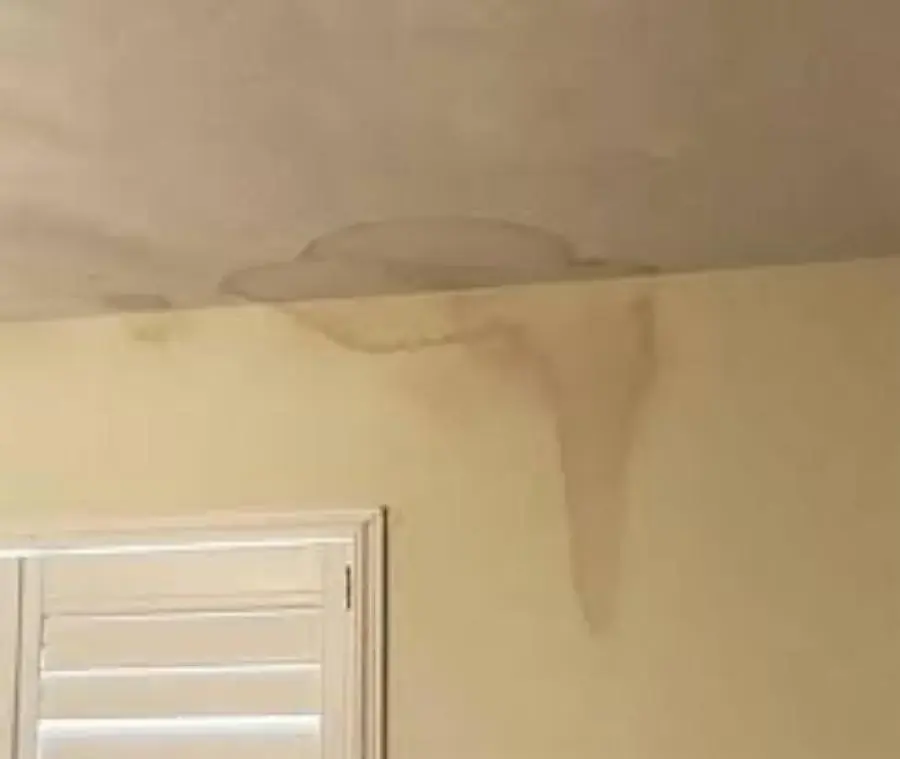
First steps for ceiling leak water damage in Kalama
Keep clear
Do not stand under a bulging ceiling, because a wet panel can drop without warning.
Drain and contain
Place a bucket and tarp below, and let a crew drain a bulging ceiling in a controlled way.
Shut off the source
If the water comes from a fixture or appliance above, close its supply valve.
Take dated photos
Photograph the stain, the sag and the source for the carrier.
How ceiling leak water damage is handled in Kalama
A ceiling is the last surface a leak reaches, so the water has usually crossed insulation, framing or a floor assembly by the time a stain shows. The paint may look fine for a day while the drywall above it fills like a sponge.
What does ceiling leak water damage cost in Kalama, WA?
A ceiling leak is priced by what the water reached. A small ceiling area runs $1,000 to $2,000, ceiling and walls $2,000 to $4,000, and two floors or units $4,000 to $8,500.
Small ceiling area
- Ceiling drained and dried
- Source identified
- Moisture readings
Ceiling and walls
- Failed drywall removed
- Wall cavities dried
- Wet insulation out
Two floors or units
- Floor framing wet
- Rooms dried below
- Complete documentation
Ranges are typical, not a quote: the water category, square footage, material class and how fast drying started move the number most. Run the water damage cost calculator for a closer range.
The ceiling leak water damage process in Kalama
Find the source
The tech checks the room above, the attic and the roof edge, tracing the leak with a moisture meter before any opening is made.
Drain the ceiling
A controlled hole releases trapped water, and the failed drywall section is cut out.
Dry the cavity
Air movers push dry air into the ceiling cavity and along adjoining walls while dehumidifiers pull moisture from the room.
Check below
Readings continue in the floor and walls beneath until every area matches its dry reference.
Where ceiling water comes from
In a single-family house the usual suspects are the roof, an attic duct or an upstairs bath. Duplexes, triplexes and fourplexes, which the city's comprehensive plan describes as the typical multifamily buildings, add the unit above, and a leak upstairs can stain the home below.
A slow leak leaves clues: a ring that grows after each shower, a patch that bubbles after rain or a stain that dries and returns. Each pattern points toward a different source, and tracking when the stain changes helps narrow it down.
- Roof or flashing failure over the attic
- An upstairs tub, shower or toilet seal
- A supply or drain pipe running through the floor above
- Overflowing condensate drains from heating and cooling units
Why sagging drywall is urgent
Saturated drywall is heavy and weak. A bulging ceiling can release a sudden load of water and plaster, so no one should stand under it. The crew cuts a controlled drain hole, catches the water and then removes the failed section.
Drying what is above and below
Drying does not stop at the ceiling. Insulation above, wall cavities beside the stain and the floor assembly of the room below can all hold water, and moisture readings show which ones need equipment.
In rentals and multifamily buildings, the unit above, the unit below and the building owner all benefit from a written record of what happened. Common upstairs sources are covered under water heater leak cleanup and appliance leaks.
Light fixtures in a wet ceiling
Water in a ceiling can reach wiring and fixtures. Turn the circuit off at the breaker and leave the fixture unused until it has been checked and dried.
Ceiling leak water damage across Kalama and nearby communities
Dispatch runs 24/7 for Kalama, WA, day or night.
Ceiling leak jobs come from single-family houses, duplexes and small apartment buildings across downtown, China Gardens and the Cloverdale Road corridor, and from homes in the Meeker Drive area and on the Spencer Creek Road hillsides, in ZIP 98625.
The same service nearby: ceiling leak water damage in Longview, Kelso, Woodland.
Ceiling Leak Water Damage questions in Kalama, WA
Water still spreading?
Ceiling stained, bulging or dripping? Describe it and the crew plans the walkthrough.
(888) 509-1696 Report a ceiling stainShould a bulging ceiling be popped?
Only by someone ready to catch the water, with clear footing and nothing valuable below. A controlled hole at the lowest point lets the water out safely and avoids a sudden collapse.
How do I tell a roof leak from a plumbing leak?
A roof leak often follows rain, while a plumbing leak shows up after using a bath, washer or dishwasher or runs constantly. Moisture readings and a look in the attic or the unit above sort it out.
What if the leak comes from the unit above?
Shutting off that unit's supply valve is the first step. The restoration team documents damage in both units and gives the building a written record to share with owners and carriers.
Does the ceiling always have to be replaced?
A small, dry stain may only need sealing and paint, but swollen, soft or sagging drywall and wet insulation should come out. Readings decide which.
Can wet insulation above a ceiling dry in place?
Fiberglass holds water and rarely dries fully in place, so it is removed when wet. Drying equipment then reaches the joists and ceiling cavity directly.
How long before ceiling stains return?
A stain returns whenever the source is still active, and a painted-over stain hides moisture that may remain. Fixing the leak and confirming dry readings comes before any repainting.
Dry the ceiling and the rooms below
A stain overhead often means a wet cavity above it. Tell the crew where it is and what is overhead, and the response starts with tracing the source.
(888) 509-1696Plan a ceiling check