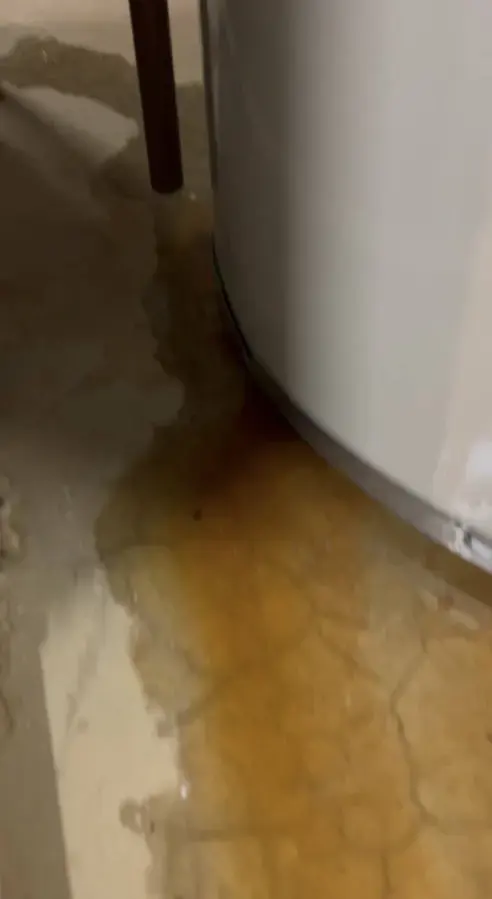
A water heater tank holds enough water to soak a closet or a garage floor in a short time. In Woodland, Washington, the replacement also involves more than a plumber and a new tank, because the city requires a floodplain review as part of water heater installation or replacement.
Key takeaways
- A floodplain review applies to water heater installation or replacement, according to the city, and plumbing additions, repairs or replacements require a permit.
- A leaking tank is replaced, not patched, so the cleanup and the permit steps are best planned together.
- Close the cold water supply to the tank and switch off the electric breaker or the gas valve before anything else.
- Where the tank sits sets the damage: a closet tank soaks wall framing, while a garage tank spreads across the floor and stored items.
- Much of the city sits on the former floodplain of the Columbia River behind a diking system, and the 2016 comprehensive plan says about 520 acres are below the base flood elevation.
Why a tank leak is more than a mop job
A tank failure releases water fast. A seam cracks or a corroded fitting opens, and the water follows the easiest path across the floor and into walls.
That is different from a slow drip at a connection, which can wait for a plumber's visit. A failing tank cannot wait.
Because the replacement involves the city, a leak sets off two jobs at once: the cleanup and the paperwork.
- A tank in a closet sends water into the wall framing and toward the room next door.
- A tank in a garage spreads across the slab and soaks boxes, stored items and the bottoms of walls.
- A tank in a utility room reaches flooring, cabinets and baseboards.
What the City of Woodland requires for the replacement
Two city rules touch a water heater replacement, and they come from different parts of the building process.
- Floodplain review applies to water heater installation or replacement, living spaces and mechanical permits.
- Plumbing permit: additions, repairs and replacements.
- Ask the installer who handles each step before the old tank comes out.
Floodplain review and base flood elevation
The city says a floodplain review applies to living spaces, mechanical permits and water heater installation or replacement. That matters in a city where much of the land sits on the former floodplain of the Columbia River, protected by an extensive diking system.
The 2016 comprehensive plan says about 520 acres of land are below the base flood elevation, and the city does not allow any residences in the floodway.
The plumbing permit
The residential permit sheet says plumbing additions, repairs or replacements require a permit.
The tank that comes out and the tank that goes in are both part of that process, so the plumber's schedule and the cleanup schedule should be planned together.
The first hours after a tank lets go
Water flows until it is stopped. Closing the cold water supply to the tank stops new water coming in, but it does nothing about what is already on the floor.
Extraction and cleanup do not need to wait for the plumber. Standing water keeps soaking baseboards, cabinets and drywall for as long as it sits.
- Switch off the breaker for an electric tank, or close the gas valve for a gas tank.
- Close the cold water supply valve on top of the tank.
- Photograph the tank, the floor and anything wet before moving it.
- Lift boxes, rugs and small items off the wet floor.
- Call the restoration team and the plumber.
What the extraction and drying team does
Water heater leak cleanup begins with extracting the standing water, then taking readings on baseboards, drywall and the floor to see how far the water traveled.
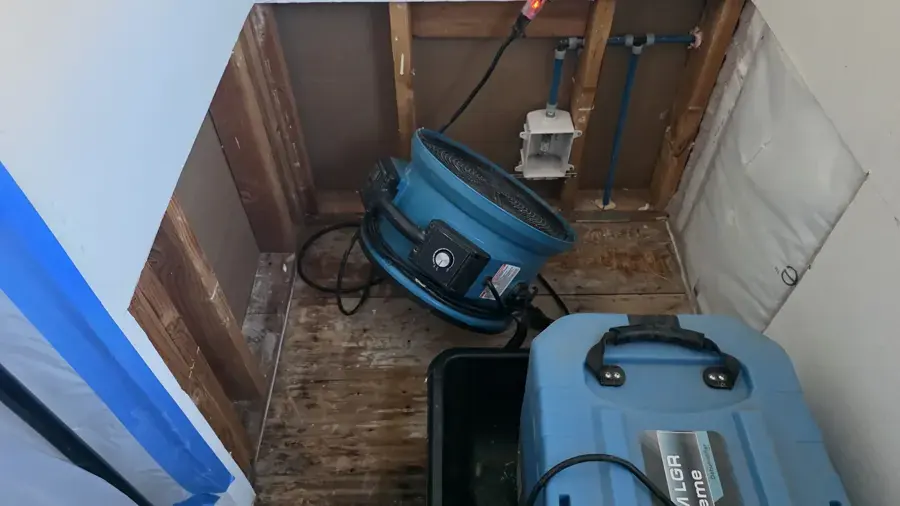
Water that reached a wall cavity needs the baseboard pulled and sometimes a lower section of drywall opened so air can reach the framing.
After that, structural drying runs air movers and dehumidifiers until framing, subfloor and drywall read within 2 to 4 points of a dry reference.
- Extraction of standing water from the floor.
- Moisture mapping of walls, floors and cabinets.
- Removal of baseboards and wet drywall where readings stay high.
- Drying equipment placed and monitored until readings match unaffected areas.
Houses, apartments and mobile homes: who a tank leak reaches
The 2016 comprehensive plan counted 1,933 dwelling units in 2014, about 67.9% of them single-family detached. That count is dated, but it shows the mix a tank leak meets.
The same count included 391 multifamily dwellings in buildings of 2 to 19 units, 73 units in complexes of 20 or more and 156 mobile homes.
- Single-family home: the water stays in one house, usually in a garage, a closet or a utility room.
- Small multifamily building: a closet tank can wet the ceiling of the unit below.
- Larger complex: the manager and the neighbors become part of the cleanup.
Closet, garage or utility room: where the water goes
The location of the tank decides how the cleanup is planned.
A tank in a closet
A closet tank sends water into the wall framing and across the floor into the next room. The cleanup opens the lower wall so the cavity can dry.
A tank in a garage
A garage tank spreads across the slab. Items stored on the floor soak first, and water can reach the bottom of the wall where it meets the house.
Timing the cleanup and the replacement together
The two jobs share the same space, so the order matters. The same steps apply across the area, including water heater leak cleanup in Longview, although permit rules differ from one city to the next.
Local water damage restoration for Woodland homes covers the extraction, the drying and the questions that come up when the plumber and the restoration team work in the same room.
- Ask the plumber whether the permit and the floodplain review are handled before the old tank comes out.
- Tell the restoration team where the new tank will go so equipment does not block the spot.
- Keep photos of the leak, the cleanup and the new installation in one folder.
- After installation, check the floor and the area around the tank for the first few weeks.
Questions
Does a water heater replacement in Woodland need a permit?
The city says plumbing additions, repairs or replacements require a permit, and that a floodplain review applies to water heater installation or replacement. The installer or the city can confirm the steps for a given address.
Can a leaking tank be patched?
Generally no. A leaking tank is replaced, because sealing a leak in the tank does not hold.
What should be shut off first?
The cold water supply to the tank, and the electric breaker or the gas valve. Then the focus turns to the water on the floor.
How far does water travel from a garage tank?
It depends on how the slab slopes and what is stored on it. Water spreads across the slab and soaks anything resting on the floor.
What is the floodplain review about?
The city attaches it to living spaces, mechanical permits and water heater installation or replacement. The city can explain what is checked for a particular property.
Does the type of building change the cleanup?
Yes. A house usually keeps the water in one place, while a multifamily building can send it into the unit below, which adds a second area to dry.