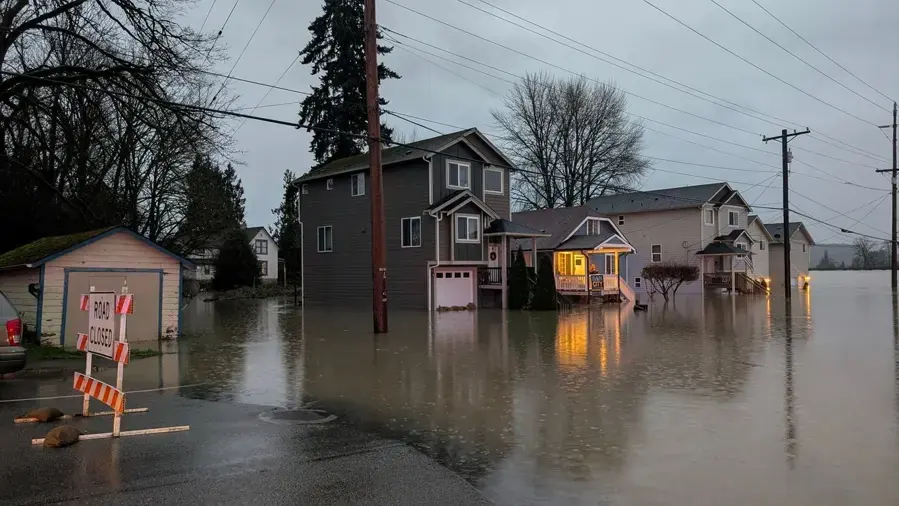
Kelso sits where the Columbia, Cowlitz and Coweeman rivers meet, so the Cowlitz River gauge near the Hall of Justice is the number that matters. Knowing what each stage means helps a homeowner or business owner decide when to move belongings and when cleanup may be needed.
Key takeaways
- The Cowlitz River is at bank full at 19.5 feet and reaches flood stage at 21.5 feet, when low lying and secondary roads begin to flood in certain unleveed areas.
- Moderate flood stage is 24.5 feet and major flood stage is 28.5 feet, when numerous roads flood and some levees are subject to erosion and overtopping.
- A minor flood warning on March 13, 2026, with the gauge just below 22 feet, was later canceled, so a reading near flood stage is not the same as water inside buildings.
- River water carries contamination, so any that enters a building is handled as Category 3.
- A stage number describes roads and levees. It does not say whether one particular building will take water.
What the gauge numbers mean here
The gauge sits near the Hall of Justice. Each step up the scale adds more roads, more low ground and more strain on the levees.
Here are the stages as they apply to the Cowlitz River at this gauge.
- 19.5 feet: bank full, the river fills its channel.
- 21.5 feet: flood stage, and low lying and secondary roads begin to flood in certain unleveed areas.
- 24.5 feet: moderate flood stage.
- 28.5 feet: major flood stage, with numerous roads flooded and some levees subject to erosion and overtopping.
What flood stage means on the ground
At 21.5 feet the first effects are on roads, in areas that are not behind a levee. A reading at this level is a signal to watch the forecast and move low stored items.
The stage describes the river, not a street address, so it cannot say whether a given garage, lower room or ground floor will take water.
What moderate and major add
According to CDID #1 and the National Weather Service, moderate flood stage is 24.5 feet and major flood stage is 28.5 feet.
At the major stage the description shifts from roads to levees, which come under the risk of erosion and overtopping.
The levee that separates downtown from the river
A levee separates downtown from the Cowlitz River, and an EPA smart growth report describes it as a levee with active freight rail.
CDID #1 is the flood protection district whose levee runs near the Hall of Justice. The lowest point on that levee is about 32 feet, and the district keeps material and equipment on standby there to raise it.
It can also close the levee at Fishers Lane.
The district's work is described near the Hall of Justice and Fishers Lane, so protection for any other street should not be assumed.
March 13, 2026: a minor flood warning that was canceled
A minor flood warning was issued for the Cowlitz River in March 2026. Around noon on March 13, the gauge near the Hall of Justice read just below 22 feet, a little above flood stage.
The warning was later canceled. The episode shows how close the river can run to flood stage without a flood following.
- Watch the gauge reading and the forecast together, because a warning can be canceled.
- Move stored items off low floors when the river nears flood stage, not after water appears.
- Keep a photo record of rooms and valuables so a loss is easy to describe later.
Why the river stays on watch
Army Corps of Engineers documents say flood risk in Castle Rock, Longview, Kelso and Lexington greatly increased because sediment settled in the Lower Cowlitz River bed after the Mount St. Helens eruption on May 18, 1980.
In December 2025 the Army Corps said dredging most of the Cowlitz River is not a realistic option, while local leaders said the river has not been dredged in about 18 years.
CDID #1 says Cowlitz County has had four 100-year flood events and two 500-year events from 1894 onward. The Columbia River snowmelt flood of May and June 1948 also flooded Longview.
What cleanup involves if river water gets into a building
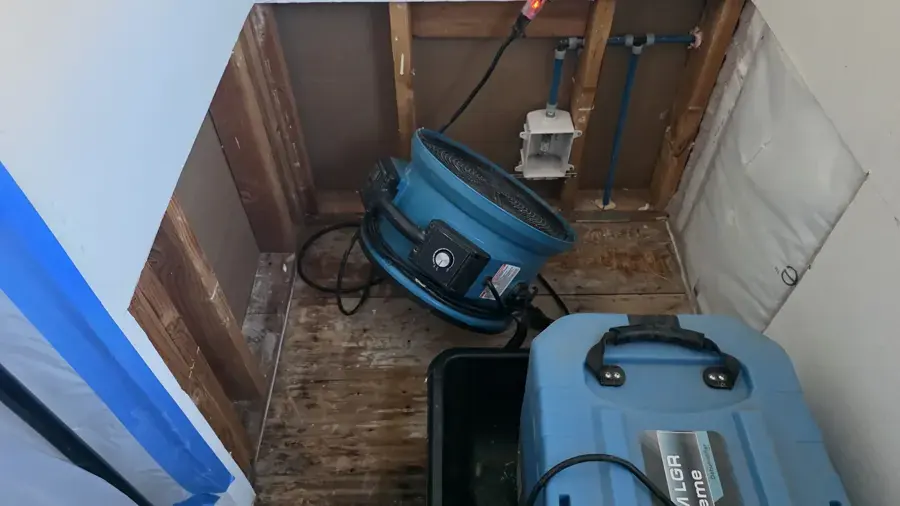
River water counts as Category 3 because it carries soil and contamination from far beyond the building. People and pets stay out of it until it is cleared.
Storm and flood water cleanup starts with safety, then removes the standing water, then takes out materials that cannot be cleaned, and finishes with cleaning and drying.
Pulling the water out first, through water extraction, keeps it from soaking further into the subfloor and the lower part of the walls.
Wet framing and subfloor left alone for 24 to 48 hours invite mold, so drying starts as soon as the water is out and the surfaces are clean.
- Carpet, pad and wet drywall that touched river water are removed.
- Floors, studs and other hard surfaces get a cleaning pass and an antimicrobial treatment.
- Drying equipment stays until moisture readings match unaffected areas of the building.
If a shop or office is near the river
Downtown businesses sit behind the levee described above, and the Hall of Justice stands near it. Even so, the stage numbers apply to roads and levees, not to one particular storefront.
A written plan for what moves first saves time when the river is rising. It also gives the cleanup team a clear picture of what was in each room.
- Decide which inventory and records go up first, and who moves them.
- List the utility shutoffs and who is allowed to use them.
- Photograph shelves, equipment and flooring so the condition before a loss is on record.
- Ask for phased drying, so part of the building can stay open where it is safe.
Getting ready before the next rise
Preparation takes little compared with cleanup. Most of it means moving things up and knowing which switches and valves to find in the dark.
The same approach applies across the area, including storm and flood water cleanup in Longview. For the full list of services in town, see water damage restoration for local homes and businesses.
- Learn the stages: 21.5 feet is where roads in unleveed areas begin to flood.
- Move stored items, files and electronics off the floor in low rooms.
- Find the main water shutoff and the electrical panel before an emergency.
- Photograph each room and its valuables.
Questions
At what height does the Cowlitz River reach flood stage?
At 21.5 feet, when low lying and secondary roads begin to flood in certain unleveed areas. Bank full is 19.5 feet.
What are moderate and major flood stage?
Moderate is 24.5 feet and major is 28.5 feet, according to CDID #1 and the National Weather Service. At major stage numerous roads flood and some levees are subject to erosion and overtopping.
Did the March 2026 warning mean homes flooded?
The event is recorded as a minor flood warning, issued with the gauge just below 22 feet on March 13, 2026, and later canceled. It is not a record of flooded homes.
Is river flood water handled differently from rain water?
Yes. River water is Category 3, which calls for protective gear, removal of porous materials and an antimicrobial treatment.
Who runs the levee near the Hall of Justice?
CDID #1, the flood protection district, whose levee runs near the Hall of Justice.