Commercial Water Damage in Vernonia, Oregon
A wet shop or office loses days of business. The crew phases extraction and drying by zone, works around opening hours and keeps records an insurer can follow.
(888) 509-1696Vernonia business loss help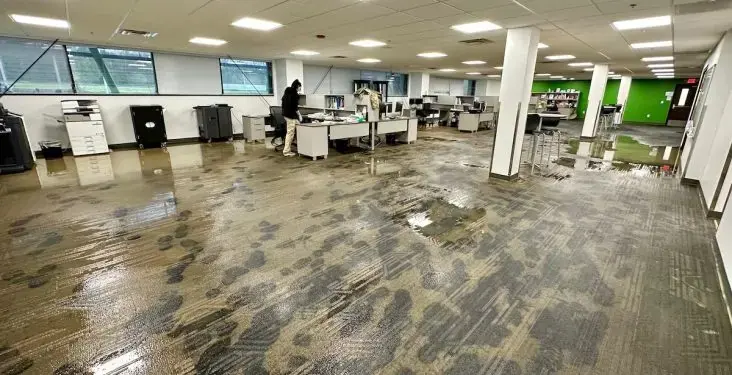
First steps for commercial water damage in Vernonia
Stop the water
Close the main or the zone valve, and switch off power to wet areas before staff or customers return.
Protect stock and records
Lift inventory, files and equipment onto dry shelves, and photograph anything that already got wet.
Tell the building owner
Let the landlord or property manager know right away, since neighboring suites may be affected too.
Call before reopening
Ask for a moisture check, because a dry-looking carpet or ceiling may still be holding water.
How commercial water damage is handled in Vernonia
Central Vernonia near Bridge Street is among the areas the National Weather Service names for major Nehalem River flooding, and the city says most floodplain business owners have been through a flood before. Commercial water damage here is about reopening quickly and keeping records an insurer can follow.
What does commercial water damage cost in Vernonia, WA?
Commercial water damage runs from $3,000 for a single suite or shop to $60,000 or more for a large building. Square footage, water type and after-hours work set the total.
Single suite or shop
- Water extracted
- Ceiling tiles and carpet out
- Zone logs kept
Floor or several units
- Phased zone drying
- Evening and weekend work
- Unit by unit records
Large building
- Multiple floors or tenants
- Large LGR and desiccant setups
- Complete claim file
Ranges are typical, not a quote: the water category, square footage, material class and how fast drying started move the number most. Run the water damage cost calculator for a closer range.
The commercial water damage process in Vernonia
Site walkthrough
The tech meets the manager, maps the wet zones and agrees which areas must stay open.
Extraction and removal
Water is extracted, and ceiling tiles, carpet and drywall in the wet zones are removed.
Zone drying
Equipment is placed zone by zone, sized to each space, and adjusted as readings come in.
Records and release
Logs for every zone are compiled, and areas are released as they reach their dry reference.
Planning around the doors
The crew works around opening hours, tenants and customers, using zones and containment to keep usable space open. Ceiling tiles, carpet and drywall in the wet zone are handled first.
- Ceiling tiles and wet insulation removed
- Carpet extracted and lifted
- Wall bases dried and checked
- Stock and records moved onto dry ground
Zone by zone drying
A large floor is split into zones, each with its own equipment and readings. A dry zone is released early, and the drying effort shifts to the zones that still hold water.
Moisture is logged zone by zone, so a landlord, a tenant and an insurer each see the same numbers and the same progress.
An action plan helps
The city advises floodplain business owners to keep a flood action plan. A plan that lists the water shutoff, the electrical panel, key contacts and what to lift first makes any cleanup faster.
River water losses begin with storm and flood cleanup, and every job finishes with structural drying.
Tenants and landlords
A leak in a multi-unit building may start in one suite and soak another. Early photographs and a written moisture map help sort out where the water began.
Commercial water damage across Vernonia and nearby communities
Dispatch runs 24/7 for Vernonia, WA, day or night.
Commercial calls cover ZIP 97064, with attention to the central blocks near Bridge Street and the east side streets, and to businesses on the outer roads that run past the creeks, whatever the size of the space.
The same service nearby: commercial water damage in Longview, Kalama, Woodland.
Commercial Water Damage questions in Vernonia, WA
Water still spreading?
Water in the shop or office? Call before it spreads.
(888) 509-1696 Ask for a building walkthroughCan the business stay open during drying?
Often partly. Containment and zones keep dry areas usable while wet ones are worked, though noise and equipment can limit some activities.
Does the crew work outside business hours?
It can. Evening and weekend work is planned when it keeps a shop or office running, and it is noted in the price.
What about the tenant next door?
Water crosses walls and ceilings. The crew checks neighboring suites and documents what it finds so each party has the facts.
Why does the city mention action plans?
The city says most floodplain business owners have already been through a flood, and a written plan speeds up the first hours of the next one.
How are commercial records different?
They are kept by zone and by unit, so a landlord, a tenant and an insurer can each follow the loss without sorting through one long file.
Is river water handled differently in a business?
Yes. Floodwater is treated as Category 3, so carpet and porous finishes come out and surfaces are treated before drying.
Keep the doors open if possible
Every day of downtime costs a business more than the water itself. One call brings a site walkthrough and a drying plan built around opening hours.
(888) 509-1696Request a site visit