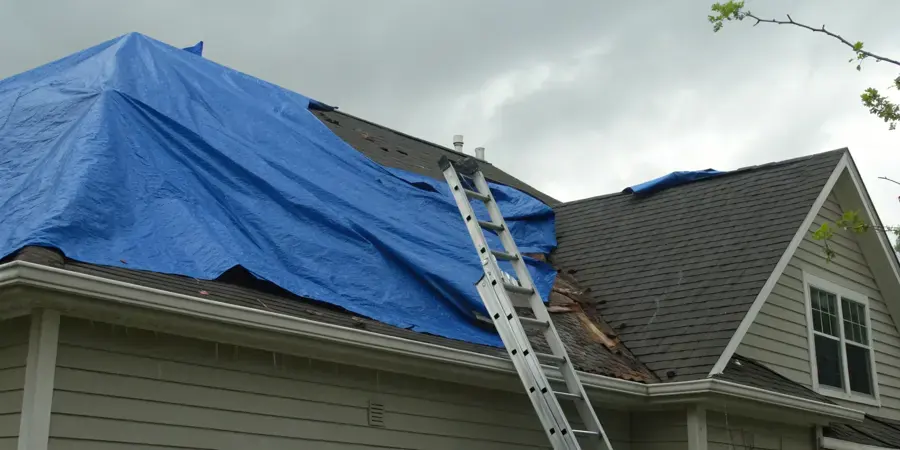
Longview averages about 48 inches of precipitation a year, and November, December and January are the wettest months. That is when wind driven rain finds the weak spots in a roof, and the first sign inside is often a brown stain or a soft spot on a ceiling.
Key takeaways
- The climate record puts the city at about 48 inches of precipitation a year, with November at 7.24 inches, December at 7.14 and January at 6.53.
- Most leaks start at flashing, vents, valleys or overflowing gutters, then travel along framing before they show as a ceiling stain.
- Wet attic insulation holds water against the ceiling drywall, so removing it is part of the cleanup.
- A bulging or sagging ceiling may hold water and has to be opened safely.
- A roofer fixes the roof and the restoration team dries the house, and both jobs can start without waiting for each other.
The wettest months: November, December and January
Winter is the test for any roof. Rain arrives often, it arrives sideways, and the same few weak spots take the water again and again.
The rainfall record
The climate table shows about 48 inches of precipitation a year. November brings 7.24 inches, December 7.14 and January 6.53, which together carry well over a third of the year's rain.
Snowfall is usually under 6 inches in town, so most winter water on a roof arrives as rain, not as slow snowmelt.
Wind driven rain
Wind pushes rain sideways, under shingle edges and around flashing that sheds water well in a straight downpour.
That is why a roof can look fine in a light shower and leak in a winter storm.
Older homes, older repairs
Construction began in 1922 and much of it was done by 1927, and the Consolidated Plan for 2025 to 2029 puts about 75% of the housing in Longview and Kelso combined before 1980.
Roofs on older homes are often patched or replaced in sections, and each seam is another place where wind driven rain can find a way in.
Where a roof leak starts
Leaks rarely start in the middle of a roof plane. They start where something interrupts the surface.
Nothing about the problem is limited to one neighborhood. It applies from the Old West Side and the Highlands to Mint Valley and West Longview.
- Flashing around chimneys, vents and skylights.
- Plumbing vent boots that crack and open.
- Valleys where two roof planes meet and carry extra water.
- Gutters and downspouts that overflow against the fascia and the wall.
- Lifted, cracked or missing shingles after a wind storm.
From attic to ceiling: how the water travels
Roof water lands on the attic insulation first. Insulation soaks it up, and the weight and moisture press on the drywall below.
The water may travel along a rafter or the top of a wall before it drips, so the stain on the ceiling is often not under the hole in the roof.
A bulging spot can hold a lot of water, and it can fall. Keep people out from under it, and let the team release the water safely.
- Brown rings or a stain that grows after rain.
- Peeling or bubbling paint on the ceiling or the upper wall.
- A soft or bulging ceiling that holds water.
- Dripping at a light fixture, which is a reason to switch off that circuit.
What to do while it is still raining
Stopping new water comes first, and the roof usually decides that. A roofer can tarp or repair the leak, while the restoration work inside starts in the meantime.
- Put a bucket or tub under the drip and move belongings out of the way.
- Photograph the stain and the drip, and the roof damage if it is safe to see.
- Switch off the circuit for a light fixture that is dripping.
- Do not poke a bulging ceiling from below without a plan for the water.
- Call a roofer for the roof and the restoration team for the water.
Checking before the heaviest rain
October comes just before the heaviest months, which makes it the time to look. A short check after the first big storm catches small problems before they carry a full winter of rain.
- Clear gutters and downspouts so they carry water away from the wall.
- Look in the attic with a flashlight for dark insulation, damp wood or daylight around vents.
- Check the ceiling under bathrooms and vents for new stains or paint changes.
- Note the date of any stain so a pattern after storms is easy to see.
What the restoration team removes and dries
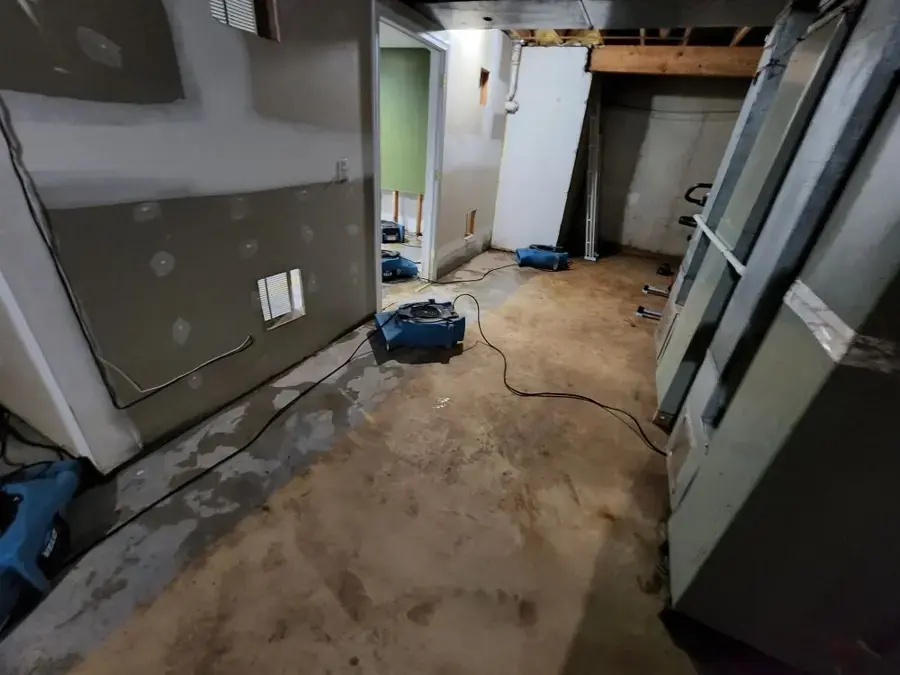
Roof leak water damage work follows the water. The team extracts what it can, removes wet attic insulation, opens the ceiling where drywall is saturated and dries the framing.
After the removal, structural drying runs air movers and dehumidifiers until the joist bays and rafters read within 2 to 4 points of a dry reference.
Wet insulation and drywall left for 24 to 48 hours invite mold, so the removal comes first and the repairs come after the drying.
- Extraction of water from floors and low spots.
- Removal of saturated attic insulation and drywall.
- Meter readings on rafters, joists and the ceiling bay.
- Drying equipment until readings match a dry area.
A ceiling stain that is not the roof
Not every ceiling stain comes from above the roof. Bath, supply and upstairs leaks can leave the same mark, and ceiling leak water damage work traces the source before anything is opened.
A stain that appears in dry weather points away from the roof. A stain under a bathroom or an upstairs floor points to a supply or drain leak.
- A stain that grows in dry weather.
- A stain under a bathroom, laundry or kitchen above.
- Several stains after one storm, which suggest a roof problem.
Questions
Why do roof leaks show up from November to January?
Those are the wettest months, at 7.24, 7.14 and 6.53 inches, and wind driven rain finds the weak spots in flashing, vents and valleys.
Is the stain directly under the hole in the roof?
Often not. Water can travel along a rafter or the top of a wall before it drips.
Should a bulging ceiling be popped?
A bulging ceiling can hold a lot of water, and it can fall. It is better to keep people out from under it and let a team release the water safely.
How long can wet insulation stay in the attic?
As short a time as possible. It holds water against the drywall and framing, and wet material left for 24 to 48 hours invites mold.
Does a tarp finish the job?
No. A tarp stops new water, but the wet insulation, drywall and framing inside still need removal and drying.
What does a roof leak look like from the attic?
Look for dark or compressed insulation, damp wood and staining around vents or the chimney. Daylight around a vent pipe points to failed flashing.
Who handles what, the roofer or the restoration team?
A roofer stops the water at the source. The restoration team extracts water, removes wet materials and dries the structure, and the two jobs do not have to wait for each other.