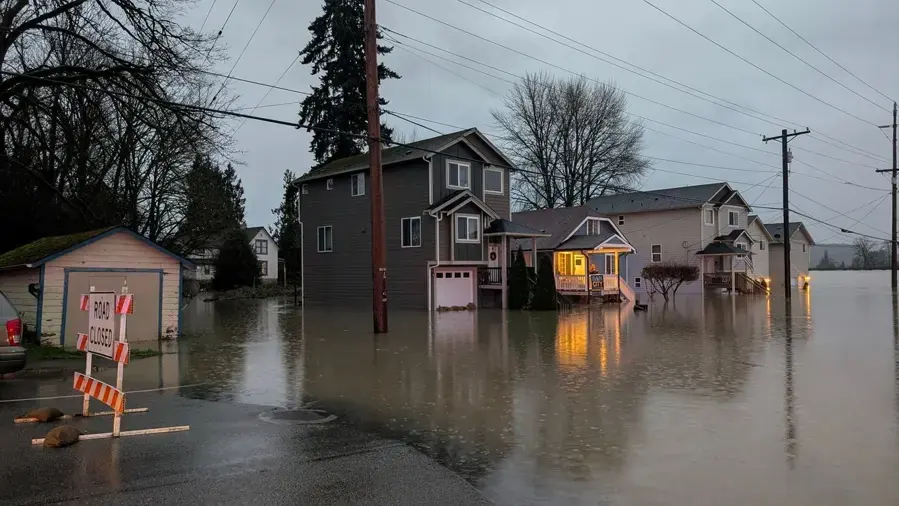
In the flood of 1996, Columbia River water flowed backwards through the stormwater system under Interstate 5. The result was more than 2 feet of water in the downtown business district, and the lesson still applies to any building near a drain that empties into a river.
Key takeaways
- In the flood of 1996, Columbia River water flowed backwards through the stormwater system under Interstate 5 at Elm Street, Ivy Street and Kingwood Street.
- China Creek overtopped its banks at Elm Street and East Frontage Road, and floodwater downtown was more than 2 feet deep.
- The flood caused over $2 million in damage, and City Hall, the library and the police and fire stations had to be evacuated.
- Water that comes up through a drain is not clean rain water, so it is handled as Category 3.
- Extraction, removal of porous materials, cleaning and drying run in that order.
What happened downtown in the flood of 1996
The city comprehensive plan describes the flood of 1996 in concrete terms. It caused over $2 million in damage, and City Hall, the library and the police and fire stations had to be evacuated.
The plan gives the year of the flood but not the month.
- More than 2 feet of floodwater in the downtown business district.
- Over $2 million in damage.
- City Hall, the library and the police and fire stations evacuated.
How a stormwater system can run backward
Gutters, storm drains and culverts drain stormwater to the Columbia River. That works while the river sits lower than the drain outlets.
When the river climbs higher than an outlet, the pipe has nowhere to empty, and river water can push back up the pipe toward the streets it normally drains.
The Interstate 5 crossings
In 1996 the backflow ran through the stormwater system under Interstate 5 at Elm Street, Ivy Street and Kingwood Street.
After the flood, the city's flood plan proposed sandbags, slide gates and portable emergency pumps at the freeway crossings.
China Creek
China Creek overtopped its banks at Elm Street and East Frontage Road. A creek and a river rising together leave water with fewer places to go.
Where the low ground sits
The local business district is east of Interstate 5, the Port of Kalama and other industrial sites sit along the riverfront, and residential areas climb the hill to the east and sit on cliffs above town.
Much of the city sits on terraces formed by the Columbia River. Downtown and the freeway crossings are where the 1996 water gathered, while the hillsides are better known for steep slopes and mapped landslide debris than for river flooding.
Vintage homes still stand from about 1880 to 1920, and about 27% of houses were built before 1960 in Census 2000 data, which is dated. Older buildings often have older floors, walls and drains to dry out after a flood.
- Downtown and the freeway crossings were where the 1996 water gathered.
- The Port of Kalama waterfront sits along the river.
- Residential areas climb the hill to the east.
Why backed up drain water is a contamination problem
Water that comes through a storm drain or a sewer pipe has picked up soil, oil and whatever the street carried. Water from a river or from a backed up drain is treated as Category 3.
That changes the work. People wear protective gear, and carpet and pad that soaked it up are removed.
When the water came up through a drain, the steps follow sewage backup cleanup.
The same approach applies to a larger loss, such as sewage backup cleanup in Longview and the other water damage services in Kalama, where the first questions are always what the water carried and what it touched.
- Protective gear for anyone working in the water.
- Removal of carpet, pad and wet drywall that soaked it up.
- Cleaning and antimicrobial treatment of floors and framing.
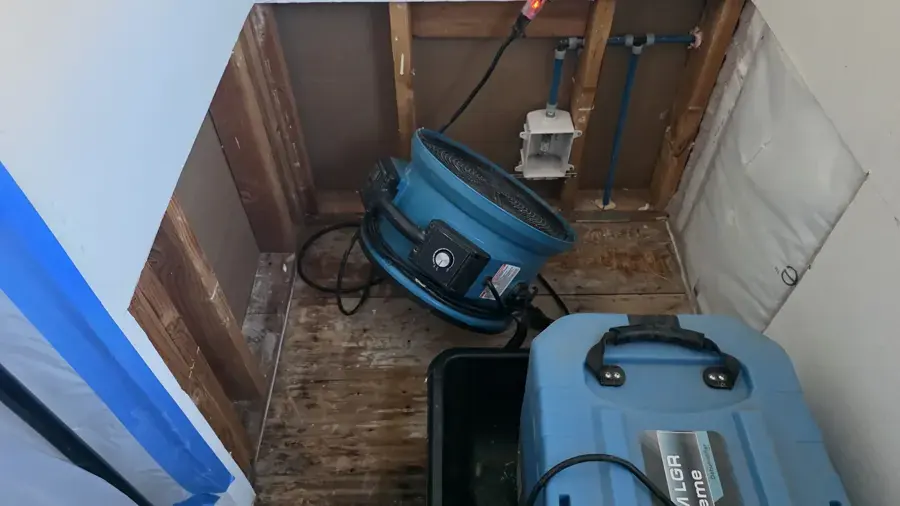
- Drying with air movers and dehumidifiers.
Later reminders: February 2019 and December 2025
On February 12, 2019, heavy rain flooded Interstate 5 northbound at Exit 30, and East Frontage Road between Elm Street and Fir Street stayed closed after the highway reopened.
During that flooding, police said the city sewer treatment plant kept up with demand while the water treatment plant was shut down. Residents were asked to conserve water, and no boil notice was needed.
- February 12, 2019: Interstate 5 northbound flooded at Exit 30.
- December 8, 2025: Cowlitz County declared a local emergency.
- December 9, 2025: river water flooded an RV park off Meeker Drive.
How the cleanup is sequenced
The order matters because each step protects the next. Storm and flood water cleanup follows the same sequence whether the water came from a river, a creek or a drain.
- Safety first: power off in wet areas and protective gear on.
- Extraction: standing water is pumped out so it stops soaking subfloor and lower walls.
- Removal: porous materials that held contaminated water come out.
- Cleaning: surfaces are washed and treated with antimicrobial.
- Drying: meter readings direct the equipment until framing and subfloor match a dry reference.
Preparing a building near a low drain
The 2005 city plan recorded these details, so they are dated. The flood combined Columbia River water and creek water, which is why conditions on both matter in heavy rain.
The proposals after the flood describe what the city planned, not a promise for any one building.
- Keep valuables and records off the floor in rooms near a drain or below street level.
- Learn where the main water and electrical shutoffs are.
- Watch river and creek conditions during heavy rain.
- Photograph each room so a loss is easy to document.
Questions to ask during a flood cleanup
A flood cleanup goes better when the owner understands each step. These questions are fair to ask the team at the start.
- How will the standing water be removed, and when will it be gone?
- Which materials are coming out, and why can they not be cleaned?
- How will moisture readings be recorded, and when will they be shared?
- Which areas are being dried in place instead of torn out?
Questions
When in 1996 did the flood happen?
The city comprehensive plan gives the year, 1996, and does not state a month.
Did the Kalama River flood downtown?
No. The downtown flood came from Columbia River water backing up through stormwater pipes, plus China Creek overtopping at Elm Street and East Frontage Road.
Is water that backs up from a drain handled differently?
Yes. It is treated as Category 3, with protective gear, removal of porous materials, cleaning, an antimicrobial treatment and drying.
What did the city propose after the flood?
The flood plan proposed sandbags, slide gates and portable emergency pumps at the freeway crossings.
Can a business stay open during cleanup?
Often part of it can. Work is sequenced room by room, with extraction and drying done in sections so unaffected areas keep operating.